Hello World Shouldn’t Be This Hard
Sometimes I complain about JavaScript. Then I look at other programming languages and realize I've been enjoying a fairly comfortable relationship with my suffering.
There's a whole category called esoteric programming languages, or esolangs. People make them to explore strange ideas, test the limits of language design, or commit a joke so thoroughly that somebody has to write a compiler for it.
Here are three of the weirdest. A small tasting menu of "why the fuck would you do this?"
1. Brainfuck (BF)
Finally, some honest branding.
Urban Müller's Brainfuck has just eight commands: ><+-.,[]. You move a pointer left or right along a row of memory cells, increase or decrease the current value, read or output a character, and loop. That's the language. The rest is your problem.
To print text, you build up the numbers representing its characters and output them one at a time. A perfectly reasonable task, provided your idea of reasonable is assembling a sandwich with tweezers.
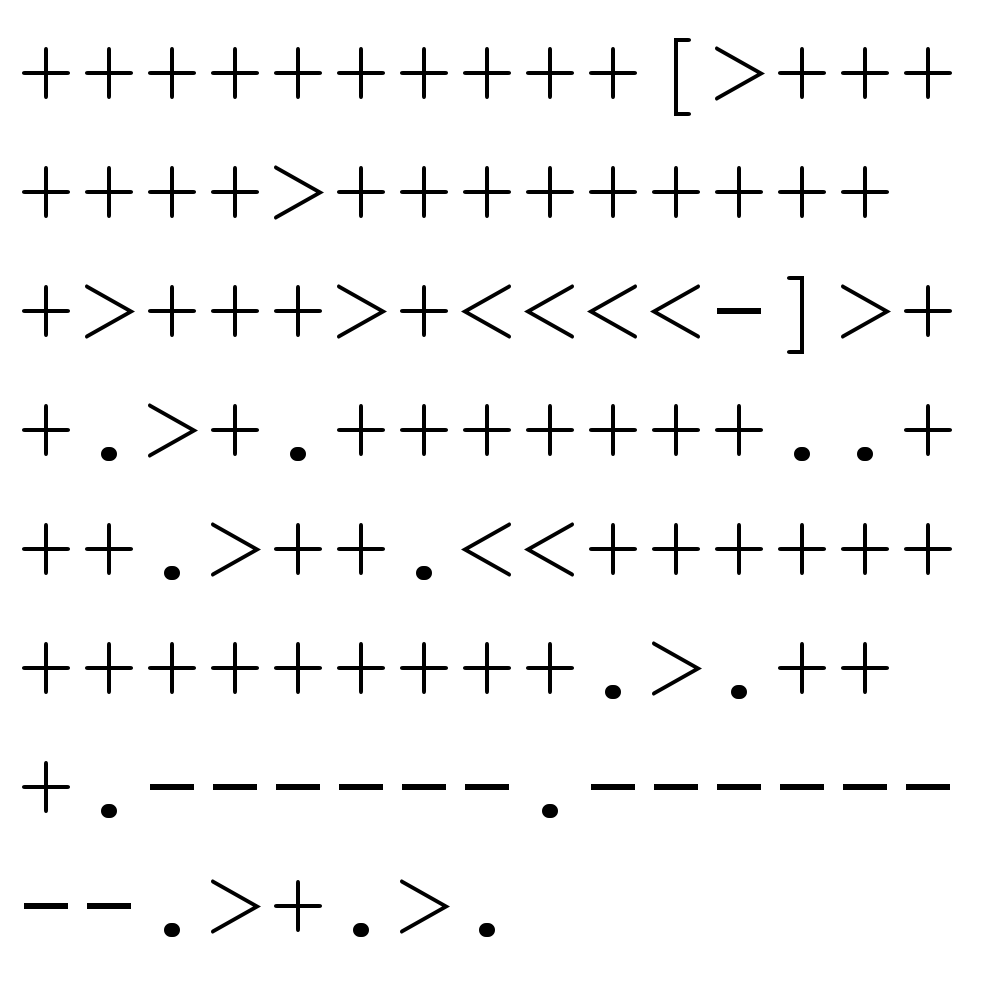
I do like the tiny instruction set. You can learn every command in a few minutes, then spend the rest of the evening wondering which cell you were in. Small language. Spacious confusion. BF, as in "briefly functional," which is also how I'd describe myself after debugging it.
2. Malbolge
Ben Olmstead created Malbolge in 1998 specifically to be difficult to program in. It's named after the eighth circle of Dante's hell. Lovely. The onboarding documentation is already a threat.
Malbolge uses base-three numbers, an instruction's meaning depends on its position in memory, and its execution rules transform code in memory as the program runs. The original specification explains the machinery, if you'd like to put a technical name to your headache.
So you can stare at a piece of code, finally understand it, and then have to account for what it turns into. I already have enough trouble reading code that stays the same.
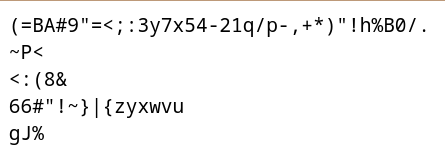
This program reads the text you enter and outputs the same text. It's a simple task, but Malbolge's unusual rules make the code difficult to write and understand.
3. INTERCAL
Don Woods and James Lyon created INTERCAL in 1972 as a parody of programming languages. Its full name is "Compiler Language With No Pronounceable Acronym". The name INTERCAL doesn't follow the initials of that phrase.
INTERCAL makes even simple arithmetic awkward, with unusual operations that interleave or select bits. But my favorite part is PLEASE. In C-INTERCAL, use it too little and the compiler rejects your program for being insufficiently polite. Use it too much and you're overly polite. Your code now needs both logic and social skills.
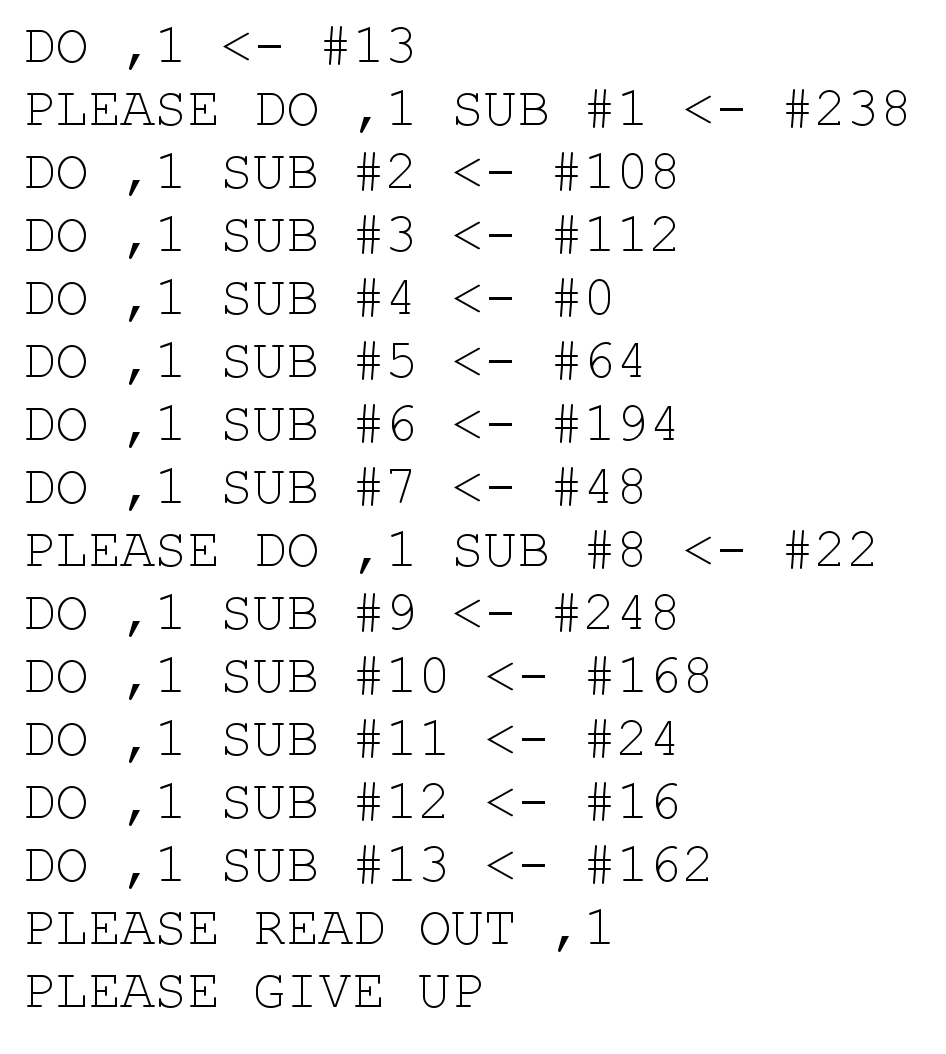
There's also GIVE UP, which ends the program. Finally, a command I can use without checking the documentation. I've been mentally executing it during meetings for years.
I like that these languages exist. Somebody followed a ridiculous idea all the way to working software, and other people showed up to write programs in it. That's a wonderful use of a computer and a questionable use of a weekend.
I'll go back to JavaScript now. It occasionally turns my numbers into strings, but at least I don't have to say please.